Showing posts with label blog post. Show all posts

Friday, 3 November 2017

Reflective Practice and Changes In Practice


download-3.jpg

Whakatauki
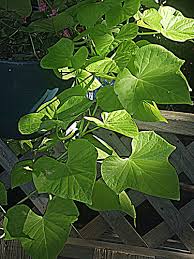
Ko te whakaaro nui ka rite ki te waina kara, rau i te rau.
Wisdom grows like the kumara vine, leaf by leaf.

Sign up for Mindlab? Are you crazy! There is already a plethora of challenges in the working day without committing more time into your evenings and beyond… These cautionary voices were echoing in my head as I signed up anyway.

First impressions
Herbert was the lecturer who diligently roused us all from our 4.30p.m. somnambulist state.  Challenging our mindsets and dusting out the filing cabinets in the deepest recesses of our brains he had me with ‘epistemology’! I love language, rich vocabulary and words that encompass depth of concept. In that opening few minutes one of my colleagues said that I looked like I had won the lottery. It has long been a sorrow of mine that students and teachers seem to increasingly confine themselves to single syllable words and a negligible enthusiasm for vocabulary exploration. Herbert then went on with ‘axiology’ and ‘ontology’; poetry!

Having captured my mind the challenge then became one of building skills.  In the past few years my learning trajectory with digital technologies has been like that of the New Horizons space probe. Travelling far beyond the ken of my known worlds exploring the possibilities of ‘what lies just beyond’. Mindlab was able to stretch my thinking even further and confirm and consolidate areas of my practice that I was still mulling over.  Mindlab reminded me how far I had already travelled along the path towards 21st pedagogy and it prompted me to think about the ramification for other colleagues who were still working in the 20th century production line educational mindset.

I am an avid reader of science fiction and aware of how quickly fiction is becoming, has become, fact. The exploration in conversations with regard to some technological developments kept me hooked into the Mindlab experience. The clincher was the exploration of augmented reality apps, robotics (that was deep water!), and 21st century learning pedagogies.

Deeper Waters
It is true that those knowledge building experiences were a hook but the reflective practice elements were the fastener. Pursuing ideas around leadership, followership, change and environment, to name a few, was challenging. These explorations supported by excellent course content and provocative questioning made the weekly face to face meetings a highlight in my week. Great was the trepidation when the course work shifted to an online learning forum.

The remainder of the course delivered through the online learning forum continued to utilise excellent materials. The opportunity to engage through webinars and the google+ community gave a level of connectivity that helped keep me centred. On the occasions when I could not participate in a webinar I felt disconnected and discombobulated!

I thoroughly enjoyed the exploration into literature on leadership and learning, connectedness and communities of learners. It was through the google+ community that I received a message from a new collaborator and colleague I had met through he kanohi ki te kanohi sessions in the first 16 weeks.  That message came at a time when I was overwhelmed by life and some unexpected personal tragedy and my trajectory began to plummet. It was an occasion when online connectivity served to motivate me personally and to remind me that we are all interconnected and therefore significant to each other, when we might least expect to be so.

Future Steps
It is true that there were moments when I wondered if I had taken on more than I needed to.  Working full time, fulfilling a multitude of demanding roles within my job, and having a busy life outside of my work place did give me pause. In that moment of pause I recognised how excited the new and further learning had made me. The reignition of a thirst and curiosity for knowledge and debate and critical conversation has been deeply motivating.  I know that my assignments have not been perfect, squashed into moments and rushed through between other demands. However they are completed and their completion was satisfying.

Mindlab has been so inspiring that, despite saying I would step back a bit next year, I have been motivated to sign on for another learning programme.  Poutama Pounamu will be delivered largely online, something that I might previously doubted I could manage. A simplistic explanation of the course is that it is focussing on cultural responsiveness, an area that seemed to connect with me throughout my Mindlab assignments, particularly in the multicultural and international perspectives on education,  Eighteen months from now I will be at the end of that course and I feel confident that I will gained deeper understandings and awareness, utilising skills that were developed through the Mindlab course. So, thank you Herbert… ontology, axiology, and epistemology are all serving me well and I them.


Wednesday, 13 September 2017

My practice within the community


My practice within the community


Whakatauki:
Titiro whakamuri, kokiri whakamua
Look backward and reflect so you can move forward
Change Agent or Changed Agent?

When considering Etienne Wenger’s social definition of learning, the morphology of social competence and personal experiences, there is a strong sense of the organic nature of a community of practice. When I considered that tension between social competence and personal experiences it was like a ‘chicken and egg’ argument about becoming ourselves… I was this professional and then through interaction within my community of practice I became this professional. Would I have changed or evolved without that interaction? Was my interaction complicit in the change the community wrought in me or did I create the change within my community? This thinking is a Gordian Knot!
Community Of Practice

I am a member of the Mawhera Kahui Ako community of practice. To date this is a collaboration of thirteen schools, eleven primary and two secondary. We are working together to accelerate the progress of all students within our Kahui Ako, with particular emphasis on literacy for boys. All Kahui Ako teachers have shared in a professional development for literacy, boys education, and cultural responsiveness. These events happened over a range of venues including our newly opened local marae. There are Kahui Ako meetings for lead teachers and principals at least twice a term. I participate in these as one of the across schools teachers. I would like to see within school teachers attending also. As a way of developing this link I have initiated meetings for all across and within school teachers out of school hours. This has been necessary because of the difficulty in our region for accessing relief teachers.
Three Modes Of Belonging
Wenger's three modes of belonging; engagement, imagination, and alignment feel familiar to me. I agree that there needs to be a balance of all three for a community of practice to thrive. I recognise the frustration that people can feel with someone who sits in the imagination (reflection) mode when action needs to be taken, but action without consideration or vision may be ill advised. As part of the Kahui Ako the mode of alignment resonated with me. Working in a reciprocal, collaborative way towards higher goals that sit outside of an individual’s actions but to which the individual’s contribution counts underpins our kahui Ako beliefs.
Practitioners And Participants

Communities of practice within education are not new however the variance in their performance or construction and outcomes is vast. I know that within our own Kahui Ako of thirteen schools this has been the case.  There is room for variance and diversity and as Stoll, L. (1998) points out it is not the cultural differences within a school that matter but the leadership and the mindsets of those working within the organisation. A community of practice can easily become a collection of non-practitioners. I work in number of roles, site specific, colleague specific; a leader and a facilitator within our Kahui Ako, an active member who strongly believes in the goals of our community of practice, and a newcomer too, to the world of connectivity online that would serve us well as a vehicle for supporting each other, prompting each other and sharing best practice.
IN-quiry And Inquiring

Robust inquiry within a community of practice would account for the three dimensions Wenger discusses: Enterprise, Mutuality, and Repertoire. Collegial relationships that demonstrate high trust, allow difficult conversations, provide mutual support and critical review and reflective feedback can engender the desire to continue to learn at all levels of practice. Review and evaluative feedback within a community of practice, being open to scrutiny from outside as well looking closely at evidence based practice is crucial to a successful and progressive community of practice. I sense a few familiar words in here: collaboration, critical thinking, creativity, relationships, mutual respect, learning, problem solving, and underpinning it all... inquiry!
Alive And Living

Developing a community of practice as a living entity requires a commitment from leadership and membership. Having common goals, such as those in our Kahui Ako is a key.  Maintaining interest and momentum requires more than just goals, those far away horizon destinations. Building in short term learning projects or events, developing internal leadership that capitalises on the breadth of skill and knowledge within a community, these are elements that allow a community to thrive.
Sustainability

Sustainability of a community includes the curation of the artefacts developed throughout that communities lifetime. What records are important to maintain?  What format or medium should these be in? Who takes responsibility for mapping the developments? Who curates the artefacts? Questions I am pondering myself as I look to the end of our first round of roles within our Kahui Ako and the handing over of the baton!

References:
Stoll, L. (1998). School culture (School Improvement Network’s Bulletin, 9). London: Institute of Education, University of London.
Wenger, E.(2000).Communities of practice and social learning systems. Organization,7(2), p225-246